

Dear friends,
If you know me, you know that I am a desperated fan of love and divine love. I might say that I’m a die hard romantic person. I love love and I love finding the divine love that hidden among us.
Nestled amidst the tranquil landscapes of Japan, numerous Shinto shrines stand as testaments to the country’s rich cultural and spiritual heritage. Among them, the Hikawa Jinja shrines hold a special place, revered for their deep connection to one of Japan’s most captivating myths: the love story of the storm god, Susanoo-no-Mikoto, and the beautiful maiden, Kushinadahime. This divine love that created and shaped the Shinto we know today.

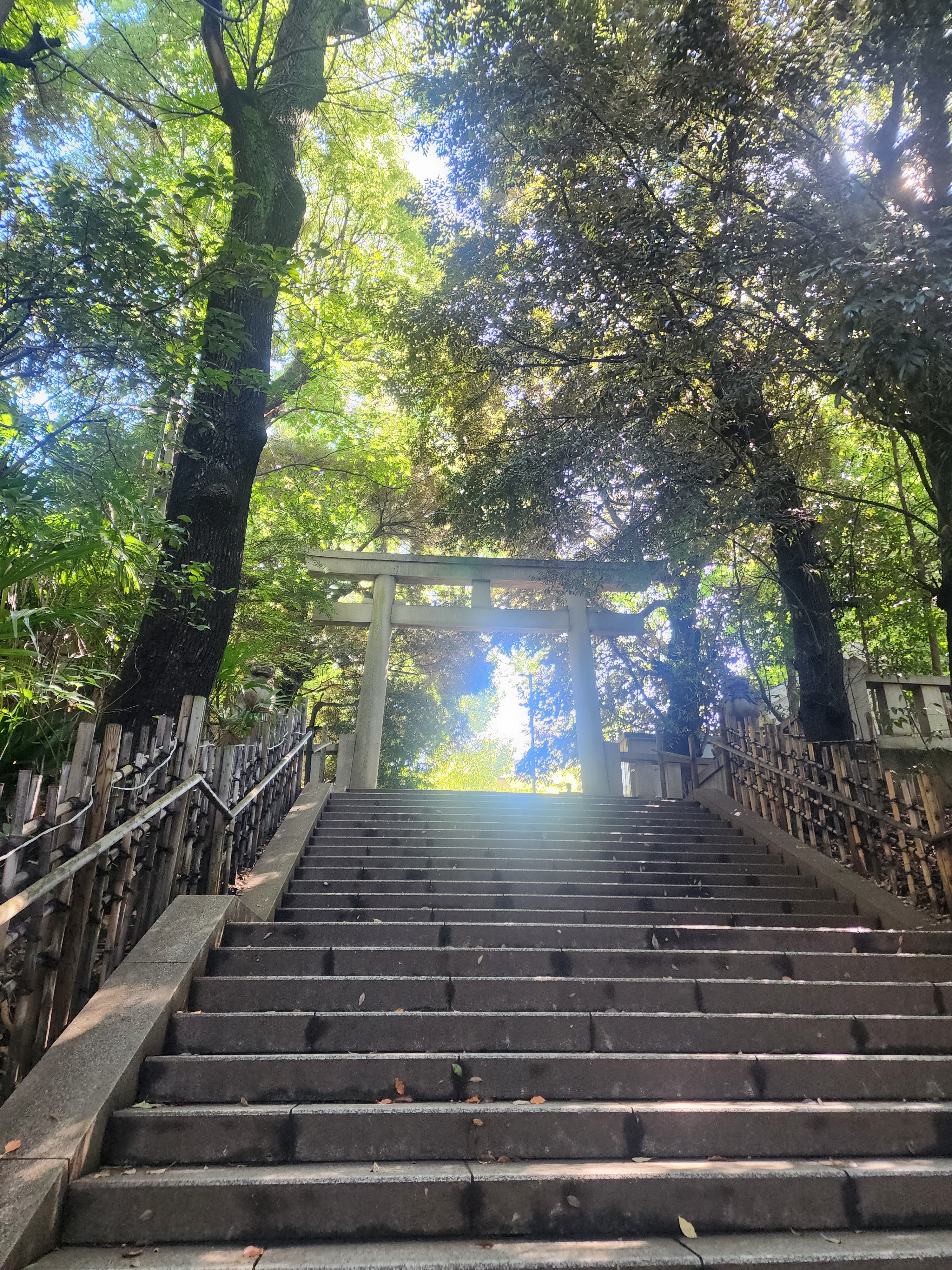
You can easily find Hikawa shrines in Japan. From the most famous Kawagoe Hikawa shrine in Saitama, to the small local one in an unknown street. The Hikawa Jinja, with its various locations most notably in Saitama and Tokyo are not merely places of worship but are living sanctuaries that keep this ancient legend alive. Susanoo-no-Mikoto and his wife, Kushinadahime were enshrined there. While Susanoo is often portrayed as a wild and unruly god, his story at Hikawa Jinja reveals a softer, more heroic side, defined by his profound love for Kushinadahime. I can tell they are the divine masculine and divine feminine of Japanese mythology – the twinflame connection we all know.

Susanoo-no-Mikoto (須佐之男命): The younger brother of the sun goddess Amaterasu and the moon god Tsukuyomi, Susanoo is a complex figure in Japanese mythology. He is the god of storms, the sea, and summer. Initially banished from the heavens for his destructive behavior, his journey to redemption is at the heart of the Hikawa Jinja myth. Despite his tempestuous nature, he is also a symbol of strength and perseverance. At Hikawa Jinja, he is not worshiped for his destructive power but as a hero who saved a maiden and founded a new lineage.
Kushinadahime (奇稲田姫): The daughter of the great god Ashinazuchi, Kushinadahime is a princess of the earthly realm. Her name, which can be interpreted as “Princess of the Inada Rice Field,” links her to fertility and a bountiful harvest. In the myth, she is a figure of grace and purity, destined to be sacrificed to the fearsome eight-headed serpent, Yamata no Orochi. Her story embodies resilience and virtue, and she is revered as a goddess of marriage and happy relationships.
The central myth of the Hikawa Jinja is the tale of Susanoo‘s encounter with Kushinadahime and his epic battle with the Yamata no Orochi. The story begins after Susanoo’s banishment from the heavens. He descends to the Izumo province, where he meets an elderly couple, Ashinazuchi and Tenazuchi, weeping in distress. They reveal that a monstrous eight-headed serpent, the Yamata no Orochi, has devoured seven of their eight daughters and is now returning for the last one—Kushinadahime.
Moved by their plight, Susanoo vows to save the maiden. He fell in love with Kushinadahime the moment their eyes met. He then devises a clever plan, instructing the couple to brew a potent sake and build eight platforms, each with a large vat of the beverage. Yamata no Orochi, lured by the scent of the sake, arrives and drinks from each vat, becoming intoxicated and falling into a deep slumber. Seizing the opportunity, Susanoo heroically slays the monster.
From within the serpent’s tail, Susanoo discovers a magnificent sword, the Kusanagi-no-Tsurugi (草薙の剣), one of the three imperial regalia of Japan. He presents this legendary sword to his sister Amaterasu, as a peace offering and a symbol of his redemption.
Susanoo proposes to Kushinadahime after the fight, and they are married. They go on to have many children, establishing a new lineage and a period of peace and prosperity in the land of Izumo. This union is a profound symbol of a love that overcomes adversity and brings forth a new beginning.

Today, people visit Hikawa Jinja for a many reasons, but mostly to pray for a good marriage, a harmonious family life, and to find a perfect partner. I went to Kawagoe Hikawa Jinja once in summer of 2023 then after a week I met my twinflame – Mr Saito. The shrine serves as a powerful reminder of the enduring nature of love and the triumph of good over evil. The story of Susanoo‘s transformation from a destructive god to a heroic and loving husband resonates deeply with visitors seeking blessings for their own relationships.
Today, people visit Hikawa Jinja for a many reasons, but mostly to pray for a good marriage, a harmonious family life, and to find a perfect partner. I went to Kawagoe Hikawa Jinja once in summer of 2023 then after a week I met my twinflame – Mr Saito. The shrine serves as a powerful reminder of the enduring nature of love and the triumph of good over evil. The story of Susanoo‘s transformation from a destructive god to a heroic and loving husband resonates deeply with visitors seeking blessings for their own relationships. Visitors can participate in rituals by buying charms (omamori) for love and marriage, and soak in the spiritual atmosphere that is deeply entwined with the legend of Susanoo and Kushinadahime.

We are all living in an age of rapid change so sometimes we just want to find a place just to relax and tell the deities there what’s in our heart. Hikawa Jinja stands as a timeless sanctuary, preserving a story of love, heroism, and redemption that continues to inspire and touch the hearts of all who visit. It is a place where the gods and their myths are not just history but a living presence, guiding and protecting those who seek their blessings.
List of Hikawa Jinja I’ve found and went to in Tokyo:
– Akasaka Hikawa Jinja: This is arguably the most well-known Hikawa shrine within Tokyo. Located in Minato ward, it’s an oasis of calm amidst the bustling Akasaka and Roppongi districts. The shrine is particularly popular for its beautiful grounds and for its annual festival, the Akasaka Hikawa Matsuri.
– Shibuya Hikawa Jinja: As the name suggests, this shrine is located in Shibuya ward. It’s one of the oldest shrines in the area and is a place of worship for local residents.
– Meguro Hikawa Jinja: Located in Meguro ward, this shrine is known for its peaceful atmosphere and beautiful cherry blossoms in the spring.
– Hatagaya Hikawa Jinja: This is a local shrine, only 15mins walk from Keio line Hatagaya Station.
– Koenji Hikawa Jinja: This place also enshrined the God of weather with the famous weather doll Teru Teru Bozu.


 Letters from Hio
Leave a reply to Hio Cancel reply